
When most people think of AI in sports prediction, they imagine algorithms crunching stats – simple pattern recognition on steroids. That’s not wrong, but it’s only scratching the surface. True innovation lies in how AI, particularly Probility AI’s probability-centered models, are moving beyond surface-level data to simulate and quantify the uncertainty inherent in sports more directly than ever before. These tools aren’t just better—they promise a paradigm shift, offering a probabilistic lens that makes the chaos of sports predictable in a fundamentally different way.
Going Beyond the Point Estimate: Embracing Probability as a Language of Uncertainty
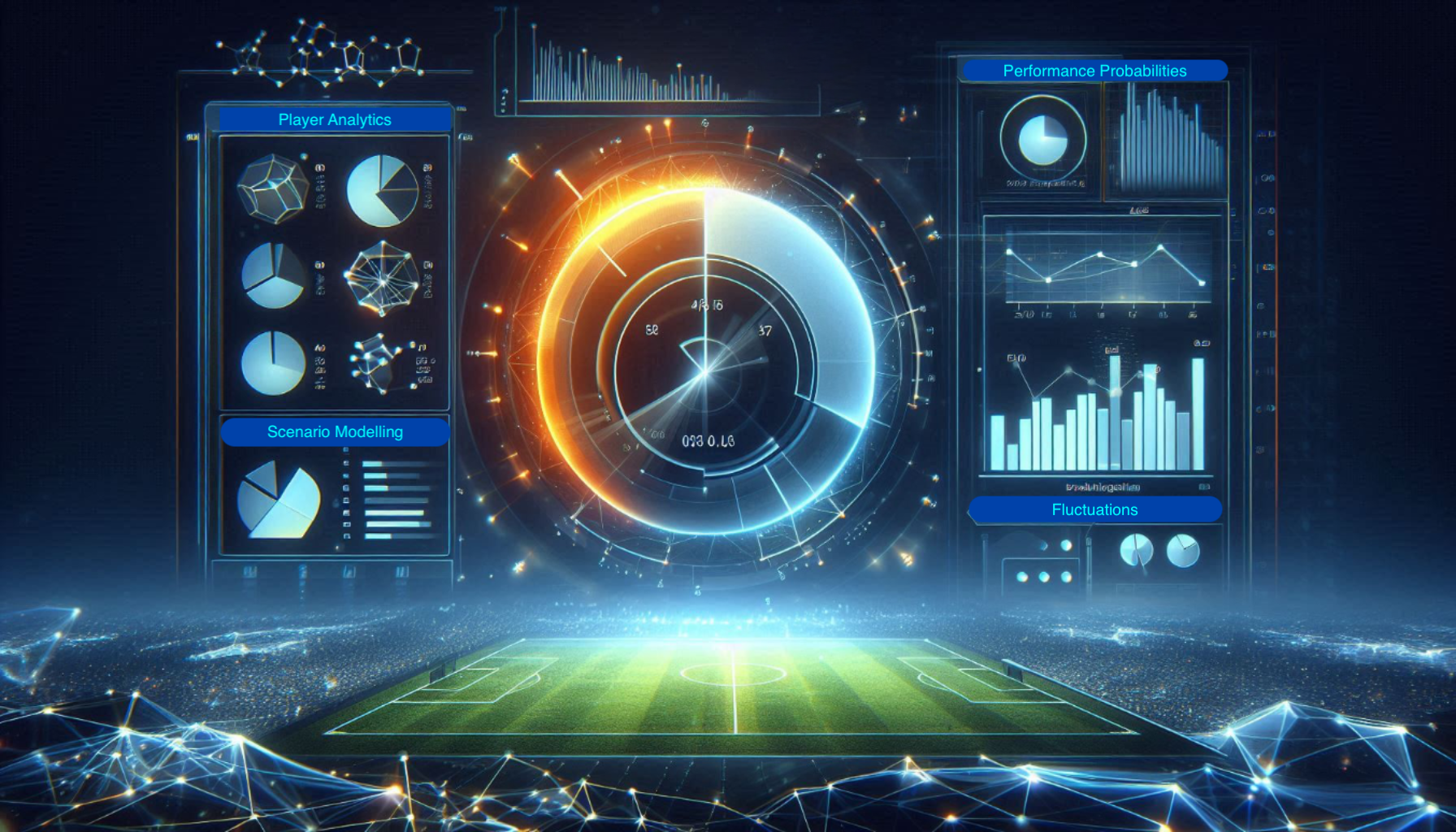
The rise of AI-driven predictions in sports, chance of winning percentage for example, is an intuitive result of applying machine learning to mountains of sports data. Such models, however, often neglect the nuanced reality of sports, where uncertainty is baked into every play, injury, and coaching decision. Probility’s approach takes this uncertainty head-on: their models produce a full probability distribution of outcomes, capturing the varying degrees of confidence and risk that surround each game or player performance.
Imagine betting not just on whether a star quarterback will perform well but understanding that his performance profile is a spectrum – ranging from highly probable high-end outputs to low-probability busts. With this insight, bettors can make more sophisticated bets – hedging risks, assigning confidence weights, and managing their portfolios much like a seasoned investor does with financial derivatives. Their models empower both experts and consumers to incorporate a probabilistic mindset, shifting from “will he perform?” to “what’s the likelihood that he exceeds expectations?” The answer to that question will greatly inform the optimum betting strategy.
Probility’s Unique Edge: Dynamic Injury and Playing Time Models
Probility pioneered injury prediction in pro sports bringing the first large-scale predictive models to the market. Those models predict injury, by count and number of games missed per injury, for every player in the National Football League (NFL) and National Hockey League (NHL) by season and career. Probility is currently using that unique data to power the next evolution of predictive analytics – accurate playing time predictions.
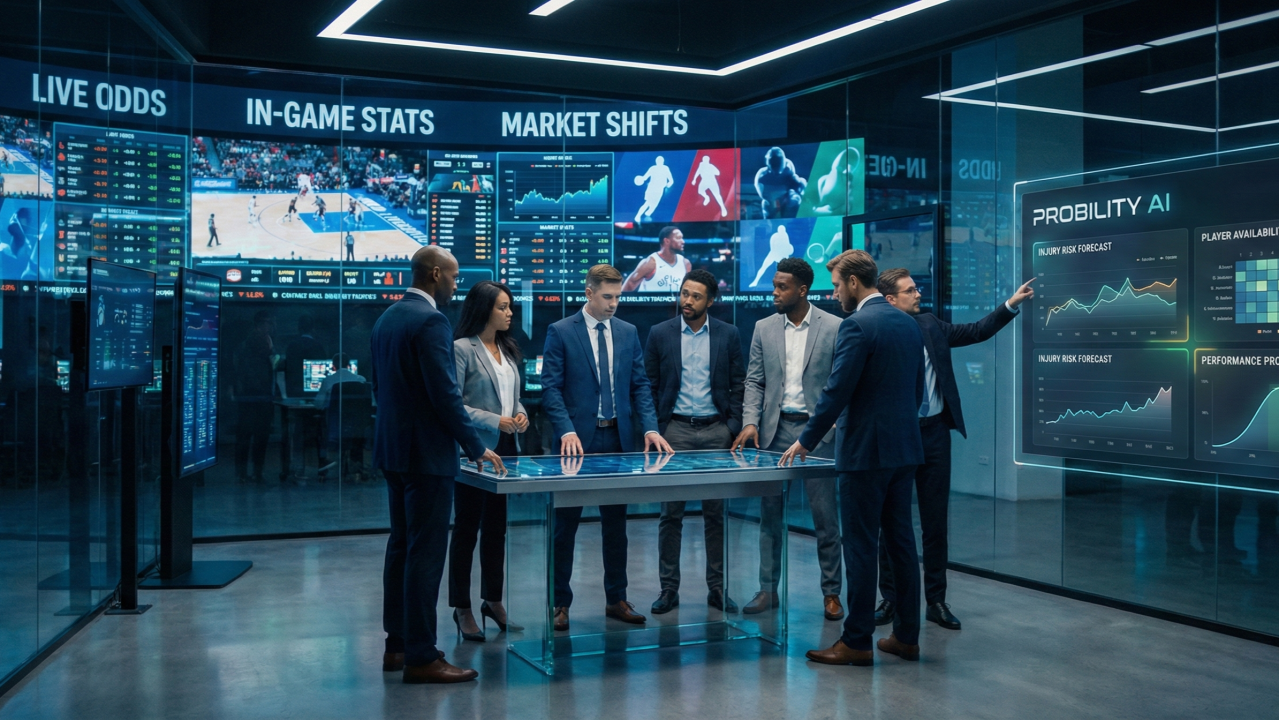
The next iteration, one that will form Probility’s most compelling differentiator, is the ability to generate real-time, probabilistic injury and playing time forecasts that thread seamlessly into performance predictions. Traditional models rely on static injury reports or simplistic timelines, which often render their predictions obsolete within hours. Probility, by contrast, is building a deep neural network architecture capable of continuously ingesting player tracking data, medical reports, practice participation levels, and even in-game load and biometric data that can be combined with Probility’s proprietary datasets and unique player metrics to generate a probability distribution over injury risk and expected playing time.
This isn’t just about flagging “injured” or “healthy” – it’s about understanding how likely a star player is to be effective on game day, and for how long. For example, rather than assuming a star receiver is “out” or “active,” the model assigns a 20% probability he plays fewer than 20 snaps, a 50% chance he plays a full game, and a 30% chance he’s limited to half the usual workload. Such granular, probabilistic insight radically alters game outcome modeling and betting strategies, especially in high-stakes markets like playoff series or injury-sensitive over/under bets.
Deep Learning Meets Expert Knowledge: A New Type of Hybrid Prediction
What sets Probility’s models apart is their innovative integration of expert-driven priors within a Bayesian framework. Our deep neural networks analyze vast datasets including tracking metrics, environmental conditions, and biomechanical data to generate dynamic predictions. These predictions are then refined through probabilistic inference techniques that incorporate prior knowledge such as coaching strategies, injury patterns, and specific player conditions like lingering ankle sprains. This hybrid approach effectively combines data-driven insights with expert intuition, enhancing the accuracy and context-awareness of our daily team performance predictions.
This probabilistic hybridization offers a crucial advantage: it doesn’t just spit out point estimates but communicates the uncertainty associated with each prediction in real-time. For bettors, this means access to more nuanced valuation signals—assessing risk vs. reward with the same sophistication professionals use to hedge market exposure.
Revolutionizing Betting Strategies: From Confidence to Calibration
The traditional approach to sports betting – identify a perceived edge and wager accordingly – becomes more sophisticated with Probility’s predictions. Instead of betting “because I think X team will win,” bettors can calibrate their confidence levels against the model’s probability distributions. They can optimize their bet sizes, hedge against model uncertainty, or focus on high-confidence scenarios that other models or book-makers underestimate.
Think about calibrating a weather forecast for a game – if there is only a 20% probability that a hurricane hits you might not buy hurricane insurance. But understanding that 20% gives you a better framework to weigh your options, including whether to buy insurance. Similarly, probabilistic sports models help you know when to go all-in and when to sit back, watch a game unfold, and wait for better signals.
Impact on Industry and the Power of Probility’s Future
The implications for sportsbooks and betting consumers alike are substantial. By integrating probabilistic models like Probility’s into their decision-making engines, sportsbooks can refine odds with unprecedented precision – matching or even outpacing sharp bettors who have long relied on a combination of intuition and rudimentary analytics. This finer calibration reduces sharp edges for bookmakers, stabilizes margins, and creates betting markets that more accurately reflect real uncertainty.
For casual bettors, the benefits are profound but often underappreciated. When probability distributions guide betting choices, they transform wagering into a game of managing risk rather than chasing hunches. Bettors can now allocate their bankroll much like a portfolio manager, diversifying across bets with varying confidence levels and adjusting exposure dynamically as in-game events unfold.
Looking ahead, Probility’s approach unlocks a rich horizon of possibilities, such as offering real-time “probability streams” during live betting sessions, personalized to individual risk appetites, or enabling advanced derivative-style markets that allow players to trade based on their confidence levels in certain outcomes. Those innovations – by making sports betting more transparent, calibrated, and strategic – can bridge the gap between the casual bettor and the professional gambler and increase success levels for both.
The Future isn’t Just Prediction – It’s Probabilistic Confidence
No model is perfect. No predictive model can account for every factor that can influence injury or performance in sports. The athletes are still front-and-center in that equation. You can’t factor out luck or chance, and you can’t quantify grit, determination, desperation, courage, or the simple will to win. Probabilistic models don’t produce rules, they produce likelihoods.
As AI continues to evolve, a new paradigm emerges – understanding sports outcomes not as black-and-white certainties but as shades of probability. Probility’s models exemplify this shift, illustrating how harnessing advanced neural networks, inference, and real-time data can turn uncertainty from a foe into an asset.
This is more than just improved prediction accuracy. It’s about communicating the unknown in a language that both experts and consumers can leverage – allowing predictions to be incorporated into betting strategies with nuanced confidence, much like a seasoned investor’s diversified portfolio.
The stakes are higher than ever. For industry innovators, embracing probabilistic AI means staying ahead of the curve and offering smarter, more engaging products. For bettors – whether casual fans or professional sharps – these insights unlock a new form of mastery, transforming uncertainty into a competitive advantage.
In this brave new world of sports prediction, the line between luck and skill continues to blur. But there is a new path to success lined with calibrated confidence and informed by probability – tools that finally allow you to see the game as a complex, unpredictable dance, but one approached with clarity and precision.